Written by: Belén Balanyá, Researcher and Campaigner at Corporate Europe Observatory (CEO)
This blog is a longer version of the Deregulation Watch post published by CEO on July 22, 2026.
In a nutshell:
Climate Commissioner Hoekstra organised an ‘implementation dialogue’ on carbon capture and storage in EU climate policy, inviting mostly representatives of dirty industries with vested interests.
When asked to bring in critical voices, Hoekstra's Cabinet falsely claimed that they had invited a diversity of stakeholders.
This is one more step in a long list of biased decision-making promoting a failed, risky and staggeringly expensive technology.
What you need to know
Business-dominated implementation dialogues have become a staple of the second von der Leyen Commission’s deregulation wave. A major danger of these “targeted” consultations is that the proposals that emerge from them are tailored to cater to the interests of corporations. A recent example took place on 29 June, when Climate Commissioner Wopke Hoekstra held one on Carbon Capture and Storage in EU Climate Policy - Barriers and Enablers.
For the past three years, the EU has been turbo-charging policies to support the massive scale-up of Carbon Capture and Storage (CCS) technologies – via public money, permitting deregulation, and dramatically upping carbon capture targets. These targets, for 450Mt/year by 2050, stand in stark contrast to today’s reality, with EU countries capturing around 1 Mt CO2 per year and permanently storing none of it. Globally, we’re “permanently” burying less CO2 than a single large power plant can emit in a year. And there’s no reason to believe this is going to change – the opposite, in fact, as CCS technologies have been trialled for over 50 years with negligible results.
Corporate influence is a major reason that the Commission is betting on carbon capture despite ample evidence against it: fossil fuel and energy-intensive industries have fed a mirage that it will help the climate and decarbonise their industries, even as they continue burning fossil fuels.
This flawed premise was the basis of Hoekstra's implementation dialogue: “The deployment of CCS will support this industrial leadership and contribute to achieving EU climate targets. However, some challenges can slow down CCS deployment – for instance, lack of funding, slow permitting and negative public perception.”
The dialogue claimed to have wide stakeholder participation, but when we wrote to Hoekstra's cabinet asking to participate, they declined. They argued that “the organisations invited were chosen to respect a diversity in terms of stakeholders, size, and geographical balance. In order to ensure a meaningful conversation, we had to limit the dialogue to a fixed number of participants. We regret that this time your organisation was not selected.”
At the time, the list of participants was not available, though it was published after our request. Contrary to the diversity claimed by the Commission, the dialogue was hugely dominated by fossil fuel and energy intensive industries, with only one trade union, few regional authorities and just two NGOs, both very supportive of CCS (and with a history of links to the fossil fuel industry), and which in no way represent the many civil society organisations that oppose carbon capture.
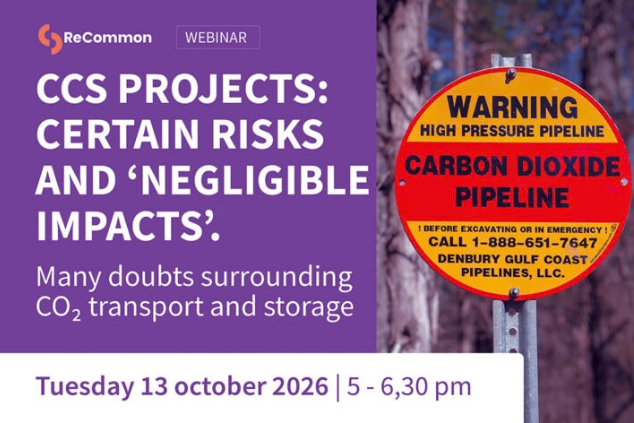
Fossil fuel participants included Fluxys, Gasunie, Equinor, Eni and INEOS, as well as oil and gas lobby IOGP, and CCS Europe. Energy-intensive industries were also present, such as cement lobby Cembureau and its member Heidelberg, steel firm Marcegaglia, and industrial gas company AirLiquide. The latter three – along with Italian oil giant Eni– all have vested interests in Italy’s Ravenna CCS/Callisto project. Both Marcegaglia and Heidelberg have obtained Innovation Fund grants to develop carbon capture for steel and cement plants in northern Italy, notes ReCommon.
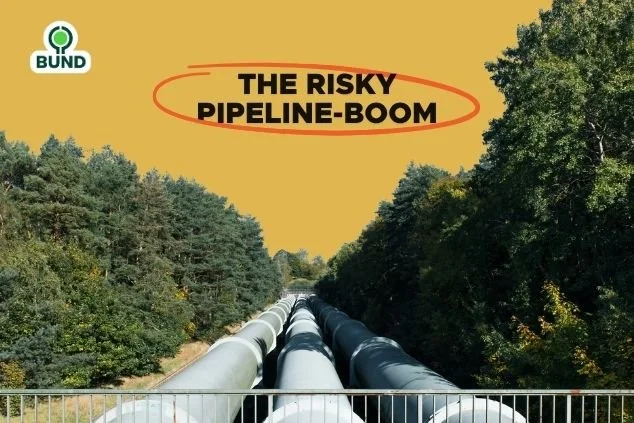
Many of the participants also have a prominent role in the ICM Forum, whose undemocratic role in shaping EU energy policy has repeatedly been exposed by Corporate Europe Observatory and others. A major demand of the ICM Forum is the construction of a CO2 infrastructure network, pipelines transporting hazardous compressed CO2 from sites of pollution to places it could (theoretically) be used or stored. Obligingly, the EU plans 19,000km of CO2 pipelines by 2040 — set to cost a whopping €23.1 billion, much of which would be borne by taxpayers — despite the dangers demonstrated by mass hospitalisations following leaks in the US.
Commissioner Hoekstra, however, in charge of the ‘net-zero’ agenda, appears to have been hoodwinked. Minutes of the implementation dialogue say that “A clear message was that investment in CO2 transport and storage infrastructure is essential.” Stakeholders called for faster and more predictable permitting, creating the right market conditions, money from the Innovation Fund and the use of public procurement to stimulate demand.
This shopping list is set to be delivered. CO2 pipelines will benefit from new permitting loopholes introduced in the Industrial Accelerator Act, the Environmental Omnibus, et al. The review of the ETS, the EU carbon market, ticks the box for getting public money from the Innovation Fund and the new Industrialisation Bank. Some EU countries, such as Italy and Germany, are going full steam ahead with CO2 pipeline plans.
Commissioner Hoekstra, closing the dialogue, stressed the importance of building a European market for CO2 transport and storage, “based on close cooperation between industry, Member States and the Commission”. These discussions, he promised, would feed into the Commission’s upcoming CO2 infrastructure and markets proposal, due by end 2026. The preparation of this proposal is subject to a complaint led by environmental group BUND to the EU Ombudswoman, over an industry-skewed public consultation (1). Likewise, the “close cooperation” Hoekstra promises leaves out all those impacted by the climate crisis, which these policies will only worsen.
This implementation dialogue on CCS is the next step in a textbook case of corporate capture and fossil fuel industry false solutions, which the Commission wants to paint as democratic.
1: In 2025, DG Energy conducted a call for evidence for an impact assessment followed by a public consultation on the CO2 infrastructure and markets initiative. A third of the respondents to the call for evidence raised serious environmental, climate, safety, health and public finance risks and harms. The questionnaire of the subsequent public consultation totally failed to enquire about any of these areas of concern, which in turn led to a bias in participation.
The views and opinions expressed in the publication are those of the mentioned organisation and do not necessarily reflect the position of all Real Zero Europe members.
Related resources: